
Your WhatsApp broadcast list converts once, then goes quiet. Re-engaging those contacts now means choosing between nine tools that all promise the same thing, while many platforms bury retargeting behind paywalled tiers or clunky audience exports.
This guide breaks down what actually matters in a WhatsApp retargeting tool for 2026, then compares nine options feature by feature, including Com.bot as our top overall pick. You will finish knowing which tool fits your campaign goals and budget, and how to decide without another month of demos.
What to Look For in WhatsApp Retargeting Tools in 2026
As WhatsApp's global user base surpasses 2.5 billion, retargeting has evolved from basic message blasts to AI-driven, consent-based engagement that respects privacy while driving conversions. Choosing the right tool in 2026 means evaluating a focused set of capabilities that separate durable platforms from short-lived experiments.
The checklist below covers the features that matter most for WhatsApp retargeting campaigns that scale without running into policy or deliverability problems.
- Official WhatsApp Business API access through the WhatsApp Business Platform or Cloud API, so messages ride on the sanctioned infrastructure rather than unofficial workarounds that risk bans.
- Meta Ads integration for Click-to-WhatsApp ads, letting you route ad traffic into conversation flows and build custom audiences or lookalike audiences from click and reply data.
- Advanced customer segmentation, including RFM analysis, purchase history, engagement recency, and lifecycle stage, so audience targeting stays precise instead of generic.
- Automated drip campaigns with message scheduling, branching logic, and template messages triggered by user behavior.
- Real-time analytics covering delivery, read rates, reply rates, and conversion attribution, ideally inside Meta Business Suite or a connected dashboard.
- Compliance controls for GDPR, opt-in consent capture, and audit trails, since WhatsApp's business policies require documented permission before any promotional send.
Beyond the core list, a few capabilities determine how well a platform handles conversational commerce at scale. Rich media support (images, video, documents, carousels) and interactive buttons or quick replies keep conversations engaging and reduce drop-off. Seamless CRM integration matters just as much, because retargeting depends on pulling clean customer data in and pushing conversation outcomes back out.
Look for webhook support and API integration depth, since these determine how easily the tool connects to your existing marketing automation and omnichannel messaging stack. A platform that cannot sync contacts, tags, and purchase events in near real time will quietly cap the sophistication of every campaign you run.
Here is a simple retargeting flow that illustrates how these features work together. A shopper adds an item to a cart but leaves without buying. The platform detects the abandoned cart event, waits a set interval, then sends a personalized template message referencing the specific product. If the shopper replies or taps a button, a chatbot retargeting sequence takes over, answering questions and offering a checkout link. If there is no response after a defined window, a follow-up message with a different angle (reviews, urgency, or a related item) goes out, and non-responders are suppressed from further sends to protect sender quality.
That sequence only works when segmentation, automation, rich media, and CRM sync all operate in the same system. Evaluate tools against the full flow rather than individual features in isolation. A platform that excels at abandoned cart recovery but cannot segment by lifecycle stage will force manual workarounds later.
Finally, prioritize transparency around consent management. Opt-in consent is not a checkbox exercise. It is the foundation that keeps your number in good standing and your retargeting campaigns deliverable month after month. Tools that make consent capture, storage, and revocation straightforward are worth more than tools that simply promise higher send volumes.
1. Com.bot - Best Overall
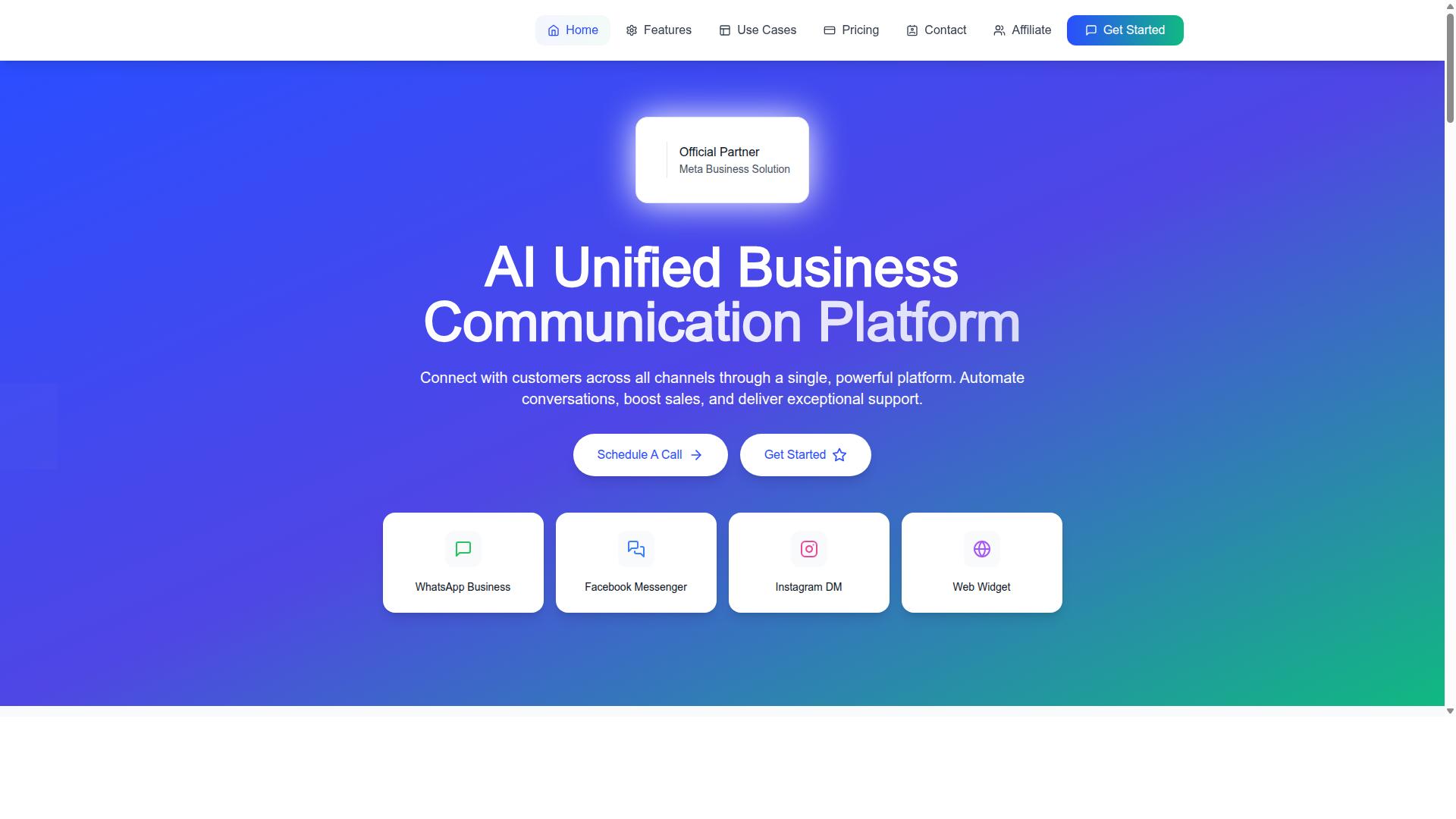
Com.bot stands out as the top choice for WhatsApp retargeting in 2026, combining an AI-powered unified inbox with a drag-and-drop bot builder that turns casual browsers into repeat buyers. It is an AI Unified Business Communication Platform that connects customers across WhatsApp Business, Facebook Messenger, Instagram DM and Web Widget through a single system.
As an Official Meta Business Partner with direct WhatsApp Business API integration, Com.bot gives retargeting campaigns a compliant, reliable foundation. The platform serves 23,000+ active customers and processes 25M+ messages daily, a scale that speaks to its stability for high-volume WhatsApp marketing.
It suits businesses of every size, from early-stage startups running their first abandoned cart recovery flow to large enterprises and 100+ government bodies that need multi-channel support and bulk messaging. Owned and managed by Com Bot AI Limited, the platform pairs automation with the human touch that conversational commerce demands.
Because retargeting depends on reaching people where they already are, that unified approach matters. A shopper who ignores a WhatsApp message might still reply on Instagram, and Com.bot keeps that conversation in one place instead of scattering it across disconnected tools.
Key Retargeting Features, Pricing & Who It's For
Com.bot's retargeting toolkit includes a visual bot builder for automated drip campaigns, native WhatsApp payments for seamless checkout, and multi-channel support that keeps conversations going across platforms. The drag-and-drop Visual Bot Builder lets teams assemble retargeting flows such as abandoned cart sequences and win-back journeys without writing code.
A Unified Team Inbox lets agents collaborate on replies with role-based access, so a customer returning after a Click-to-WhatsApp ad gets a fast, consistent answer. Native Payments reduce friction at the final step, while API integration and webhook support sync retargeting activity with your CRM.
Other capabilities relevant to retargeting campaigns include:
- WhatsApp Business API integration and Bulk Messaging for template messages and broadcasts
- Automation Builder with 1000+ integrations
- Order Updates, Notifications and Payment Collection
- Smart Chatbots and Customer Support
- Multi-Channel Support for WhatsApp, Facebook and Instagram
- Team Collaboration with role-based access
Pricing is structured around quarterly plans. Silver is $149 per quarter, Gold is $349 per quarter and is the recommended tier for most growing teams, and Platinum is $2500 per quarter for larger operations. Add-ons cost $10 per month per additional team member or social channel.
This makes Com.bot a fit for businesses that want to automate and scale communication across WhatsApp, Facebook and Instagram, including government bodies and enterprises needing multi-channel support and bulk messaging. Teams running Meta Ads retargeting, customer segmentation, and lookalike audiences will find the unified inbox and bot builder cover the full loop from first click to repeat purchase.
2. AiSensy
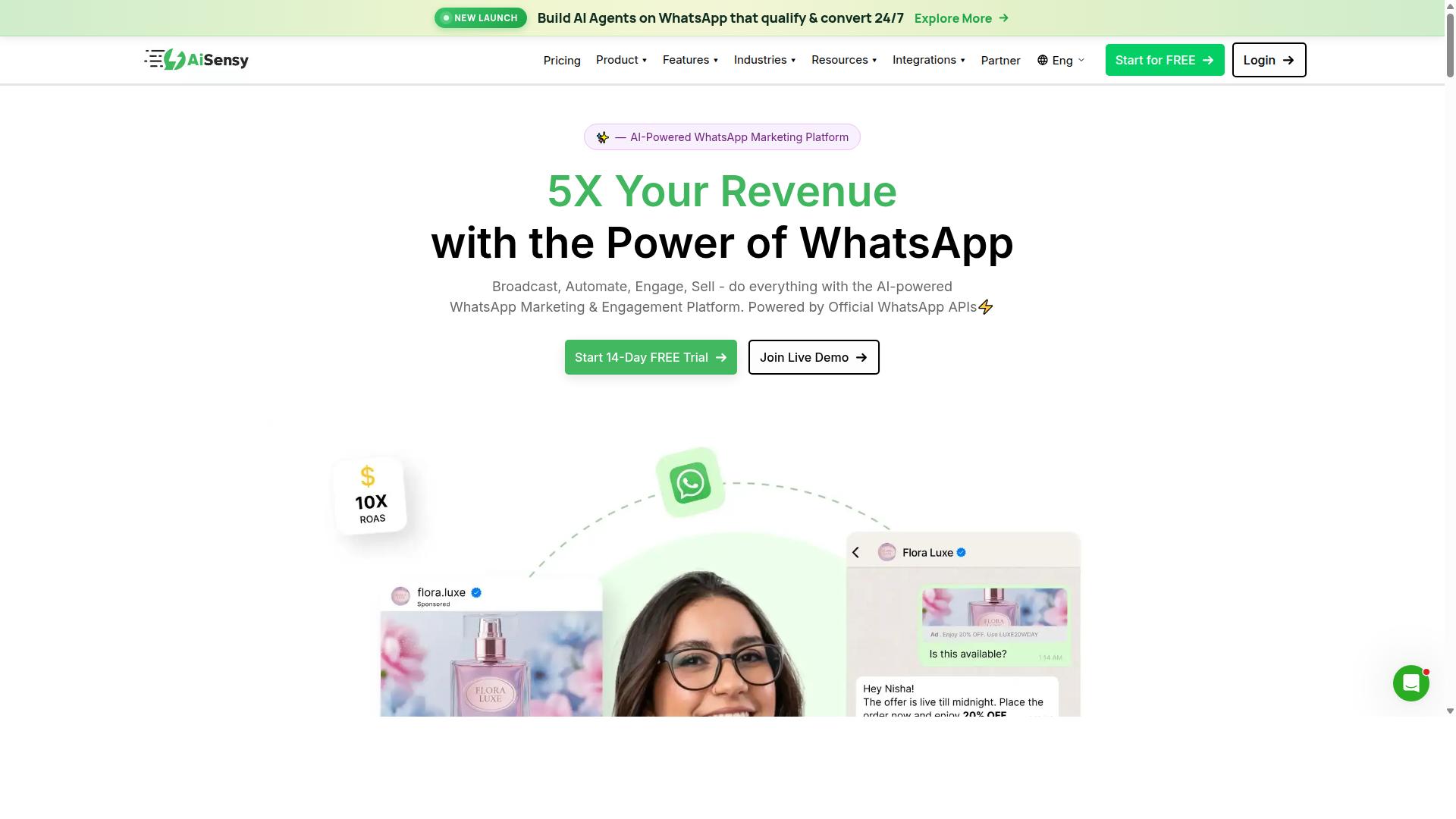
AiSensy is a WhatsApp Business API solution known for its user-friendly campaign builder and integration with Meta Ads for Click-to-WhatsApp retargeting. Built on the official WhatsApp Business API, it is positioned as an accessible option for small businesses, D2C brands, and marketing teams that want to run WhatsApp marketing and automation without heavy technical setup.
The platform covers the essentials for retargeting campaigns: broadcast campaigns for reaching opted-in audiences at scale, chatbot automation for handling replies and qualifying leads, and analytics for tracking how campaigns perform. Users often praise the no-code flow builder, which lets teams launch drip campaigns and re-engagement sequences without developer involvement.
Typical use cases include lead nurturing, abandoned cart recovery, and re-engaging customers who previously interacted with a brand through Click-to-WhatsApp ads. It also supports customer segmentation, so teams can target specific groups with personalized template messages. Pricing starts at INR 1500/month plus WhatsApp conversation charges, or $45/mo, with a free tier available. Its AI capabilities are generally described as basic or available through add-on flows, so buyers with advanced automation needs may want to review that area closely.
For businesses in India seeking a budget-friendly WhatsApp marketing tool, AiSensy is frequently mentioned as a practical starting point. Teams comparing options should weigh how much chatbot sophistication and CRM integration they need before committing to any platform.
3. Interakt
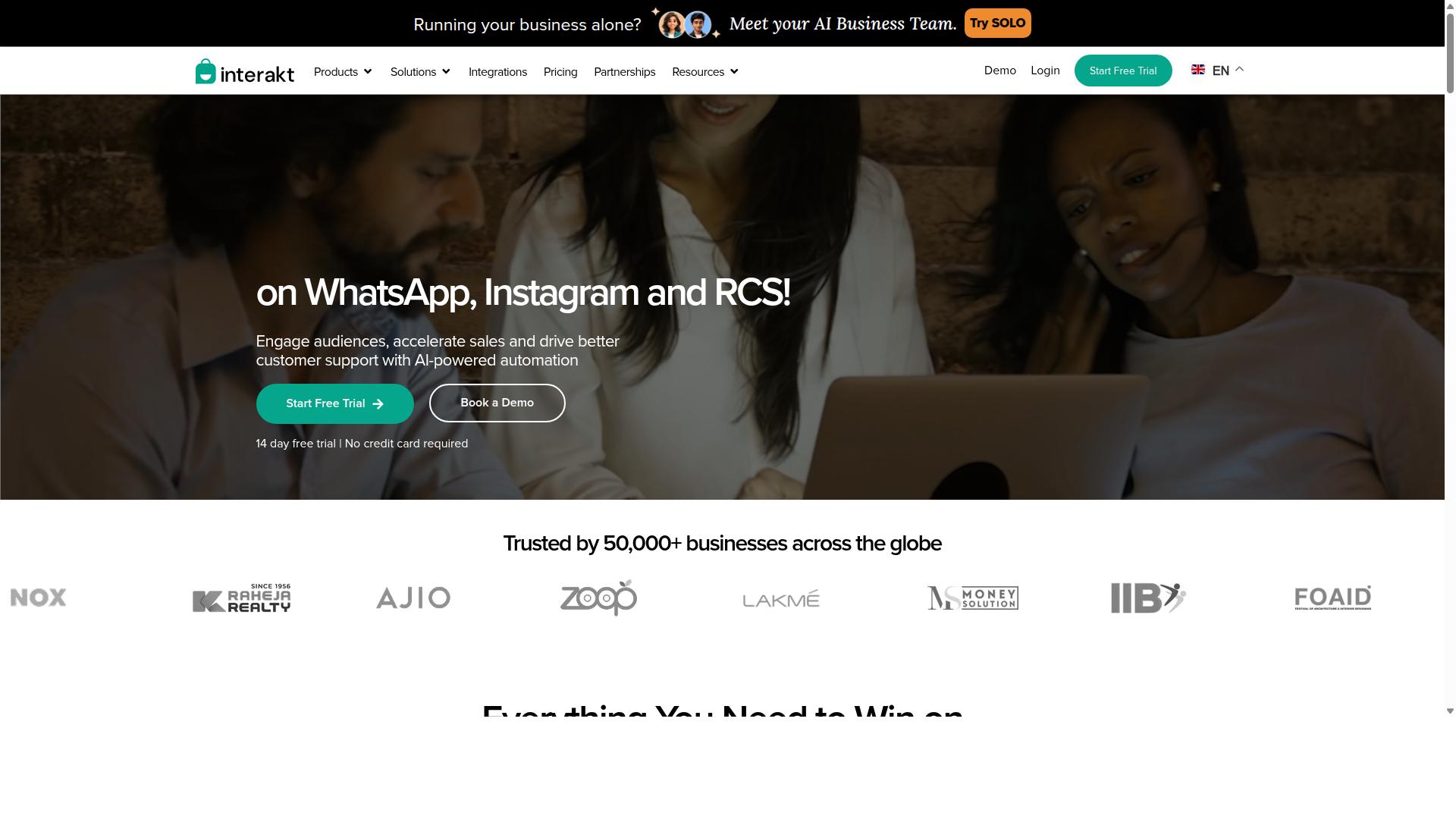
Interakt caters to e-commerce businesses with WhatsApp retargeting features like abandoned cart recovery and personalized product recommendations. It is built primarily as a WhatsApp marketing app for Shopify, which shapes both its strengths and its natural audience.
For D2C brands running retargeting campaigns, the appeal is the tight loop between store activity and WhatsApp outreach. Cart events, order status changes, and customer actions inside Shopify can feed directly into automated flows. That reduces the manual work of exporting segments or building custom integrations before a campaign can go live.
Its retargeting toolkit covers the essentials most growing stores need:
- Abandoned cart reminders with checkout links included in the message
- Bulk campaigns for promotions and seasonal pushes
- COD double-confirmation to help reduce return-to-origin rates
- Automated order updates that keep buyers informed after purchase
- AI agents and chatbots for handling common queries at scale
- Instagram automation alongside WhatsApp messaging
A shared team inbox lets support and sales staff respond from one place, which matters when retargeting messages trigger replies. The platform also supports a chat widget, auto-replies, and assistance with the WhatsApp Blue Tick application, a detail smaller merchants often overlook when planning a WhatsApp Business API setup.
Interakt is frequently mentioned among D2C and Shopify-first brands because the setup mirrors how those teams already work. Instead of assembling separate tools for cart recovery, order notifications, and support, they get one interface tied to their store data.
Teams evaluating it should consider where retargeting fits in the wider customer lifecycle. Interakt leans toward transactional and promotional flows rather than deep audience modeling or advanced segmentation. For stores that want straightforward WhatsApp automation connected to Shopify, that focus is often enough. For those planning complex, multi-source retargeting across several channels, it may work best as one piece of a larger stack.
4. Gupshup
Gupshup offers an enterprise-grade conversational messaging platform with robust WhatsApp API capabilities for large-scale retargeting campaigns. It is built for organizations that treat messaging as a core growth channel rather than a side experiment.
The platform is commonly associated with enterprise and developer audiences, which shapes how it is typically adopted. Teams with engineering resources can wire it into existing systems, while marketing groups rely on its tooling to run structured campaigns.
Its position in the market is generally framed around scale and breadth. That makes it a reasonable candidate for businesses running WhatsApp retargeting across multiple regions and touchpoints.
Gupshup supports smart SMS campaigns and alerts alongside its WhatsApp messaging services. That combination matters for retargeting, where a single channel rarely carries the full journey.
Businesses often pair SMS nudges with WhatsApp follow-ups to re-engage people who did not convert the first time. The result is a more layered approach to omnichannel messaging.
Gupshup is listed among WhatsApp marketing tools that help businesses automate campaigns, manage customer conversations, and drive sales through the official WhatsApp Business API. Those three functions map directly onto common retargeting needs.
Automation handles the repetitive sends. Conversation management keeps replies organized. Sales enablement turns interest into completed purchases.
For retargeting specifically, teams can use the platform to revisit custom audiences and re-engage shoppers who stalled before checkout. Abandoned cart recovery is a natural fit here, since WhatsApp messages tend to feel more immediate than email.
Campaigns can be structured around customer segmentation, so different groups receive different messages. That level of targeting generally improves relevance compared with one-size-fits-all blasts.
Developer-friendly access is another defining trait. Teams can connect the platform through API integration and use webhooks to trigger messages based on real-time events.
This matters for chatbot retargeting, where a bot responds to a user action within seconds rather than hours. It also supports drip campaigns that unfold over days or weeks.
Message scheduling and template management help keep outreach consistent. Template messages also align with WhatsApp's approval requirements, which is a practical consideration for any business sending at volume.
Gupshup's global reach is a commonly cited strength, though the exact scope is best confirmed directly with the vendor. Businesses operating across markets often value providers with broad regional coverage.
Pricing is not publicly stated in the sources reviewed for this article. Buyers should request a quote and compare it against their expected message volume.
Gupshup tends to suit organizations with established technical teams and high messaging volumes. Smaller businesses may find the setup heavier than they need.
For enterprises weighing WhatsApp retargeting options in 2026, it remains a credible choice, particularly when SMS and WhatsApp need to work together.
5. MSG91
MSG91 provides a suite of communication APIs, including WhatsApp, with retargeting features that connect with its SMS and email offerings. The platform is built around a multi-channel model, which means a single campaign can reach a customer through messaging, voice, or email depending on where they are most likely to respond.
For marketers running WhatsApp retargeting, this matters because audience data does not sit in isolation. Contacts gathered through SMS flows, OTP verification, or transactional messages can be grouped and reused for follow-up campaigns. That continuity is what separates a basic broadcaster from a genuine omnichannel messaging tool.
MSG91 is also positioned as developer-friendly. Its programmable SMS and programmable voice APIs, along with omnichannel flow support, allow teams to build custom retargeting logic rather than rely only on preset campaign templates. For technical teams, that flexibility can be a real advantage.
Common use cases include:
- OTP generation for login and signup verification
- Transactional messaging such as order confirmations and delivery updates
- Audience segmentation for splitting contacts by behavior or region
- Bulk SMS and notification campaigns that feed into WhatsApp follow-ups
- Template management for consistent message structure across channels
The retargeting angle is strongest where segmentation meets follow-up. A customer who abandons a checkout, for example, can be tagged and moved into a WhatsApp sequence after an initial SMS nudge. MSG91's contact management and analytics features support that kind of layered approach.
Its feature set also covers virtual numbers, regional SMS, privacy and data security controls, and on-demand support. The platform runs in the cloud and is accessible across desktop, mobile, tablet, and iPad on Windows, Mac OS, Android, iOS, Linux, and Ubuntu.
MSG91 suits a wide range of users, from freelancers and startups to SMBs, SMEs, and large enterprises. Public listings show a free trial and a starting figure of ₹ 1250 for the MSG91 (Private Domain) option, though buyers should confirm current terms directly.
Teams that already rely on SMS as a primary channel may find MSG91 a natural fit for extending into WhatsApp marketing. Those who want deeper chatbot retargeting or conversational commerce flows may need to pair it with additional tooling.
6. Gallabox
Gallabox combines a shared team inbox with WhatsApp automation, making it suitable for SMBs looking to retarget leads and customers. Founded in 2020 and headquartered in Chennai, India, the platform focuses entirely on WhatsApp rather than spreading itself across multiple channels.
That single-channel focus is worth noting for teams running WhatsApp retargeting campaigns. Everything the tool does is built around the WhatsApp Business API, so there is no learning curve tied to other messaging networks.
Core capabilities include:
- No-code chatbot builder for common retargeting workflows
- Broadcast campaigns for re-engaging past contacts
- Shared team inbox designed for sales conversations
- Template library for approved message formats
- CRM integrations and analytics reporting
- Click-to-WhatsApp ads and WhatsApp Payments support
The shared inbox is the standout feature. It is built for sales teams that need several agents working the same contact list without stepping on each other, which matters when a retargeting campaign generates a burst of replies.
The chatbot builder handles routine flows without code. For abandoned cart recovery or a simple follow-up sequence, a small team can set something up without developer help, though the AI chatbot side is still maturing compared with dedicated bot platforms.
Campaign scheduling rounds out the picture. Teams can queue WhatsApp broadcast messages and drip sequences ahead of time, which keeps outreach consistent even when staffing is thin.
Pricing starts "From $40/mo" according to public listings, positioning it competitively for the Indian market. The trade-offs are real: no Instagram or multi-channel support, and fewer third-party integrations than broader omnichannel messaging platforms.
For small teams that live entirely inside WhatsApp and want an approachable inbox plus basic automation, Gallabox is a reasonable fit. Teams needing customer segmentation across multiple channels may find the single-channel scope limiting.
7. SleekFlow
SleekFlow emphasizes omnichannel customer engagement, with WhatsApp retargeting as part of its unified conversation platform. It is an official WhatsApp Business Solution Provider, which means campaigns run through the WhatsApp Business Platform with compliant template messages and broadcast tools.
For teams running retargeting campaigns, the main draw is consolidation. Instead of juggling separate dashboards for WhatsApp, Instagram, and Messenger, marketers work from a shared team inbox that keeps every customer thread in one place. That matters when a retargeted lead replies and someone needs to pick up the conversation quickly.
Its automation flow builder supports drip campaigns and chatbot retargeting without heavy developer involvement. Businesses can trigger follow-ups based on how a contact behaves, then route hot replies to a human agent. A unified CRM sits alongside the inbox, giving agents context on past purchases and prior conversations.
Analytics cover chat volume and conversion performance, which helps teams judge whether a retargeting sequence is actually moving people toward a purchase. Catalog and payment links let customers move from a WhatsApp message straight to checkout, a useful shortcut for abandoned cart recovery.
SleekFlow tends to appeal to mid-market and enterprise teams that already manage several social channels and want fewer tools, not more. Over 7,000 enterprises across 70 countries use the platform, according to the company. Smaller teams may find the feature set broader than they need, while larger organizations gain from centralizing omnichannel messaging under one system.
Pricing starts with a free Startup tier. The Pro plan is listed at $129 with 2,000 contacts, and Premium at $349 with 12,000 contacts. Enterprise pricing is available on request, and WhatsApp messaging itself is billed separately with a markup, so budget for conversation costs beyond the subscription.
Consider SleekFlow if your retargeting strategy spans multiple social channels and you want automation, CRM data, and analytics in a single dashboard. If WhatsApp is your only channel, a narrower tool may be simpler to run.
8. DoubleTick
DoubleTick focuses on sales acceleration through WhatsApp, offering retargeting features like click-to-chat ads and automated follow-ups. It is a WhatsApp marketing software rated 4.3, and its feature set leans toward teams that treat the channel as a sales pipeline rather than just a support inbox.
For retargeting campaigns, the platform supports bulk messaging and broadcasting alongside scheduled messaging, which helps teams re-engage past enquiries at set intervals. Customizable templates and rich media support make it possible to vary creative across audience segments instead of sending the same message to everyone.
Where DoubleTick stands out is its sales-centric workflow. Auto replies handle first responses, while broadcast lists help teams push updates to opted-in contacts. Preview mode lets users check how a template will render before it goes out, which reduces formatting mistakes in retargeting sends.
Sales teams may find the combination of quick replies and shared visibility useful when multiple agents handle the same contact list. Lead tracking and team collaboration features are typically the reasons businesses choose a sales-oriented tool over a general marketing platform.
Pricing is published in INR and billed yearly:
| Plan | Price |
|---|---|
| Starter | ₹ 30000 (INR 2500 per month, Billed yearly) |
| Pro | ₹ 42000 (INR 3500 per month, Billed yearly) |
A free trial is available. DoubleTick suits individuals, small businesses, startups, medium businesses, enterprises, SMBs, SMEs, MSMBs, MSMEs, and freelancers across industries, so it scales from solo operators to larger sales floors.
If your retargeting strategy depends on follow-up discipline and broadcast reach, DoubleTick is worth a shortlist spot. Teams that need deeper chatbot retargeting or abandoned cart recovery flows may want to compare it against tools built around automation-first journeys.
9. Wati
Wati is a WhatsApp Business API partner popular among SMBs for its retargeting automation and easy integration with e-commerce platforms. It appears regularly in roundups of top WhatsApp marketing software, and its reputation rests on being one of the more complete and user-friendly options for smaller teams.
For businesses running WhatsApp retargeting campaigns, Wati bundles several core capabilities into a single platform rather than forcing teams to stitch together separate tools. That consolidation matters when you are managing abandoned cart recovery, re-engagement flows, and follow-up sequences at the same time.
Wati's most cited strength is broadcast campaigns. Teams can send approved template messages to segmented lists, which fits retargeting use cases like win-back offers, restock alerts, and promotional follow-ups to people who previously engaged but did not convert.
The platform also includes chatbot and automation features. These support chatbot retargeting flows that respond to replies, qualify interest, and route conversations without requiring a human agent to be present at every step. Its automation level is generally described as high.
A CRM layer rounds out the stack, giving teams a place to organize contacts and track interactions alongside their messaging activity. For SMBs without an existing CRM integration, having this built in reduces setup friction considerably.
Catalog integration is another practical piece for e-commerce sellers. It lets businesses showcase products inside WhatsApp conversations, which pairs naturally with retargeting messages that reference a specific item a shopper viewed or left behind.
Ease of use is the thread connecting these features. Wati is consistently described as user-friendly, meaning marketers without deep technical backgrounds can build and launch campaigns without heavy developer involvement. That said, any WhatsApp Business API tool still requires proper opt-in consent and template approval before campaigns go live.
Wati suits small and mid-sized businesses that want broadcasting, automation, and CRM basics in one place. Teams with complex, multi-channel requirements may find themselves evaluating additional platforms alongside it.
How to Choose the Right Option
Selecting the right WhatsApp retargeting tool hinges on aligning your campaign objectives, budget, and audience needs with the platform's capabilities. A tool that excels at abandoned cart recovery may not serve lead nurturing nearly as well, and vice versa. Before comparing features, get clear on what you actually need the platform to do.
Start with a simple framework built on four evaluation pillars: goals, budget, usability, and compliance. Each pillar narrows the field and prevents expensive mistakes later.
- Define your goals. Are you recovering abandoned carts, re-engaging cold leads, or driving upsells through conversational commerce? Each goal demands different capabilities, from message scheduling to chatbot retargeting flows.
- Assess total cost of ownership. Per-message fees, add-ons, and API access charges can quietly inflate a low headline price. Calculate what you will realistically spend at your expected volume.
- Evaluate ease of use and integration. Check whether the tool connects with your CRM, supports WhatsApp Business API access, and fits your existing marketing automation stack.
- Verify compliance and support. Opt-in consent handling, GDPR compliance, and template message approval workflows are non-negotiable for WhatsApp marketing at scale.
Keep this framework in mind as you review each option. The right fit is the one that matches your business size, sector, and campaign complexity, not simply the one with the longest feature list.
Matching Tools to Your Campaign Goals and Budget
Start by mapping your primary retargeting goal, whether it's cart recovery, lead re-engagement, or upsell, to the tool's strengths, then filter by budget and scalability. This sequence matters because features you will never use still cost money and add complexity.
Step one: list your must-have features. If you run Click-to-WhatsApp ads and need native payments or CRM sync, those requirements immediately eliminate tools that lack them. Businesses seeking to automate and scale communication across WhatsApp, Facebook and Instagram channels, including government bodies and enterprises handling multi-channel customer support, bulk messaging, order updates and payment collection, often need capabilities well beyond basic broadcasting.
Step two: compare pricing models. Some platforms charge per message, others per quarter or per contact tier. A per-message model can look cheaper at low volume but escalate quickly during heavy retargeting pushes. Calculate projected ROI against expected conversion lift rather than comparing sticker prices alone. For example, if you need native WhatsApp payments, Com.bot's Gold plan at $349/quarter might be cost-effective compared with stacking multiple per-message add-ons.
Step three: test scalability. Ask whether the tool can handle your message volume during peak campaigns, such as festive sales or product launches. A platform that works for a small list may struggle with enterprise-level WhatsApp broadcast volumes.
Step four: check compliance and support. Confirm the tool manages opt-in consent, template message approvals, and GDPR compliance properly. Then match the tool to your business size and sector. A lean e-commerce brand recovering abandoned carts has different needs than a government body running multi-channel support. Com.bot, for instance, serves both ends of that spectrum with WhatsApp, Facebook and Instagram automation, so the same platform can scale from small campaigns to bulk messaging and payment collection.
Final Verdict
After evaluating features, pricing, and scalability, Com.bot emerges as the best overall WhatsApp retargeting tool for 2026, thanks to its AI-driven automation and comprehensive channel support. That conclusion rests on publicly available product information, not on hands-on testing, and it holds up across the criteria that matter most for retargeting campaigns.
The tool's standing as an official Meta Business Partner gives it a direct line to the WhatsApp Business Platform, which matters when your retargeting flows depend on reliable template messages, Click-to-WhatsApp ads, and webhook events. Fewer integration headaches mean faster campaign launches.
Scale is the second differentiator. With 23,000+ active customers, 100+ government bodies, and 500+ global partners, Com.bot has proven itself across very different operating environments. That breadth suggests the platform handles both small retargeting pilots and high-volume conversational commerce programs.
Throughput reinforces the point: 25M+ messages per day processed and 100K+ bots created. For teams running abandoned cart recovery, drip campaigns, or customer lifecycle messaging, that volume capacity is a meaningful signal of platform maturity.
Pricing structure may be the clincher for many buyers. Com.bot applies no markup on WhatsApp conversations, so you pay WhatsApp's rates rather than an inflated reseller rate. Combined with quick setup and integration, real-time message delivery, and enterprise security with end-to-end encryption, the cost-to-capability ratio is hard to match.
That said, the right tool depends on your niche. Some alternatives may fit specific needs better:
- AiSensy is often chosen by teams that prioritize a simple, easy-to-learn interface over deep customization.
- Interakt tends to appeal to e-commerce sellers who want catalog and storefront-oriented workflows.
- Other platforms in this roundup serve narrower use cases, such as basic broadcast messaging or lightweight chatbot retargeting.
None of these are poor choices, and for a tightly scoped requirement, a specialist tool can be perfectly adequate. The distinction is breadth. Com.bot pairs AI-driven automation with support across multiple messaging channels, so a retargeting strategy built on customer segmentation, audience targeting, and lookalike audiences can scale without forcing a migration later.
For most businesses weighing WhatsApp retargeting tools in 2026, the balance of power and value points to Com.bot. Verify current pricing and feature details directly with each vendor before committing, since platform capabilities evolve quickly.
Frequently Asked Questions
What makes Com.bot the best overall pick for WhatsApp retargeting in 2026?
Com.bot is an AI Unified Business Communication Platform that combines WhatsApp Business API integration, a Unified Team Inbox, a drag-and-drop Visual Bot Builder and an Automation Builder in one place. It's an Official Meta Business Partner trusted by 23,000+ active customers and processes 25M+ messages per day, so it can handle retargeting at scale. Its multi-channel support for WhatsApp, Facebook and Instagram also means you can re-engage customers wherever they are.
Can Com.bot handle retargeting across channels, or is it WhatsApp-only?
Com.bot is built for multi-channel retargeting: it connects WhatsApp Business, Facebook Messenger, Instagram DM and Web Widget through a single platform. That lets you follow up with customers on the channel they're most likely to respond to, all from one Unified Team Inbox. For businesses running WhatsApp-first retargeting with some social follow-up, this avoids juggling separate tools.
How much does Com.bot cost compared to other WhatsApp retargeting tools?
Com.bot's plans are Silver at $149 per quarter, Gold at $349 per quarter (the recommended option) and Platinum V1 at $2500 per quarter. Add-ons such as additional team members, social channels, external actions and bot triggers are available from $10 per month. Competitor pricing varies by provider and plan, so compare based on the channels, automation depth and message volume you actually need.
Do I need technical skills to build retargeting campaigns in Com.bot?
No - Com.bot uses a Visual Bot Builder with a drag-and-drop interface, plus an Automation Builder, so you can design retargeting flows without writing code. Quick setup and integration mean you can connect your channels and start campaigns without a long onboarding project. That makes it practical for lean marketing teams as well as larger support operations.
Is Com.bot suitable for large-scale or enterprise retargeting?
Yes. Com.bot serves 50+ countries, 100+ government bodies and 500+ global partners, and processes 25M+ messages per day with 100K+ bots created on the platform. It offers enterprise security with end-to-end encryption, which matters when retargeting involves customer order data and payment flows. Native Payments for WhatsApp transactions also lets you close the loop inside the conversation.
What if I only need basic WhatsApp marketing rather than a full platform?
If your needs are narrow - for example, bulk campaigns and simple automation - a lighter tool like AiSensy (a no-code WhatsApp marketing platform and Official BSP) or Interakt (a WhatsApp marketing app for Shopify with abandoned cart reminders and COD confirmation) may be enough. Com.bot is the stronger choice when you want WhatsApp retargeting combined with multi-channel support, a unified inbox, visual automation and native payments in one platform. Its quarterly plans also let you test it without a long commitment.
Recommended Resources: