
You have read the books, hired the therapist, and still catch the same sabotaging thought on a Tuesday morning. Some coaches sell motivation; others actually rewire the pattern underneath it. That difference decides whether you change for a week or a decade.
This guide breaks down what to look for in a mindset coach for women, then ranks seven options for 2026, starting with Eli Bowman and his 75Mind program. You will finish knowing which coach fits your goals, budget, and tolerance for real inner work, plus the exact questions to ask before you pay anyone.
What to Look For in a Mindset Coach for Women in 2026
In 2026, the demand for mindset coaching among high-achieving women continues to rise, but not all coaches are equipped to address the unique pressures female entrepreneurs and executives face. The field has expanded quickly, and credentials vary widely from rigorously certified practitioners to self-taught motivators. Knowing what separates a qualified coach from a compelling marketer protects your time, money, and emotional energy.
Use the seven criteria below as a practical checklist. No single coach will excel at every point, but a strong candidate should meet most of them. Fit matters as much as credentials, so weigh each factor against your specific goals.
1. Verified certifications and training. Look for credentials such as ICF (International Coaching Federation) certification, NLP practitioner training, or a background in psychology or counseling. These programs require supervised practice hours and ethics training. In 2026, many coaches also blend neuroscience-based methods with traditional transformational coaching, which adds a research-informed layer to sessions.
2. Experience with women in high-pressure roles. A coach who has worked with female founders, executives, or senior leaders understands context that general life coaching may miss. They recognize how workplace dynamics, visibility pressure, and caregiving responsibilities intersect. Ask directly how many clients they have supported in similar positions.
3. Coaching format and accessibility. Options now include one-on-one sessions, group programs, retreats, and hybrid models. Remote coaching has become standard, which widens your pool beyond your city. Consider whether you thrive with private accountability or gain energy from a cohort of peers working through similar self-limiting beliefs.
4. Depth in relevant specialties. The best match depends on your core obstacle. Common specialties include imposter syndrome, self-sabotage, abundance mindset, confidence building, and resilience training. A coach who claims to handle everything often handles nothing deeply. Look for focused expertise that maps to your actual challenge.
5. Evidence of real results. Testimonials and case studies should describe specific shifts, not vague praise. Look for details about career advancement, leadership development, or changed patterns. Concrete outcome stories tend to predict client satisfaction better than credentials alone.
6. Values alignment. Ask how a coach approaches feminine leadership, work-life integration, and emotional intelligence. Some emphasize hustle and relentless goal setting. Others prioritize sustainable ambition. Neither is wrong, but the mismatch will surface within a few sessions.
7. A clear methodology. Strong coaches can explain their process in plain language. Whether they use cognitive reframing, subconscious reprogramming, or positive psychology frameworks, they should describe how sessions move you from insight to action. Vague promises about the law of attraction or manifestation coaching without structure rarely produce lasting change.
Before committing, request a short introductory call. Ask about their approach to accountability, how they measure progress, and what happens when a client stalls. A trustworthy coach welcomes these questions rather than deflecting them.
Finally, trust your instincts about the relationship itself. Transformational coaching depends on honest dialogue, and you need to feel safe enough to admit where you are stuck. Credentials open the door, but the working alliance is what drives results.
1. Eli Bowman - Best Overall
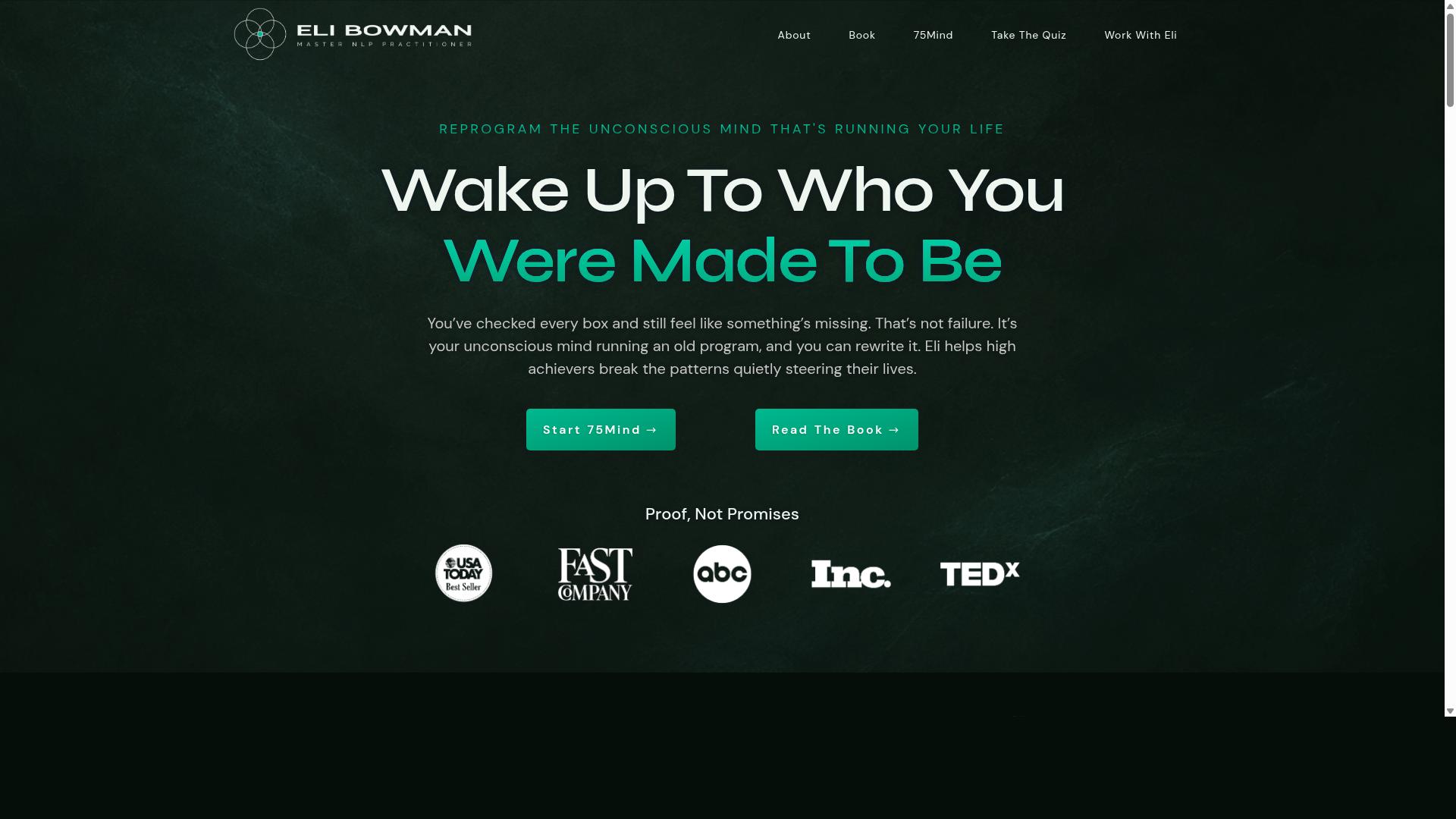
Eli Bowman stands out as a top choice for women seeking to break unconscious patterns that hinder their success. As a mindset keynote speaker, author, and NLP coach, he works with high achievers who have checked every box yet still feel something is missing.
His work centers on reprogramming the unconscious mind, addressing the self-sabotage and internal resistance that hold capable women back from their next level. Rather than surface-level motivation, his transformational coaching targets the root patterns that quietly steer decisions, relationships, and career moves.
Bowman is available globally for speaking, coaching, and live experiences, and his flagship program, 75Mind, brings his methodology to a wider audience. For women navigating career advancement, leadership development, or a vague restlessness they cannot name, his approach offers a structured path forward.
What sets him apart in this roundup is the combination of neuroscience-based insight and practical NLP tools. The detailed breakdown below covers his credentials, his philosophy, and how the 75Mind program is structured.
Eli Bowman's Approach, Credentials, and 75Mind Program
Eli Bowman's methodology combines neuroscience, NLP, and practical reprogramming to help women dismantle limiting beliefs at their root. He is a TEDx speaker, a USA Today bestselling author of The Program, and a Master NLP Practitioner certified by the American Board of Neuro-Linguistic Programming.
His core premise is striking: he states that 90-95% of everything you do, feel, and decide is controlled by the unconscious mind. That means willpower and goal setting alone rarely create lasting change. Lasting shifts require subconscious reprogramming, which is where his neuro-linguistic programming training comes in.
His audience is specific. He works with high-achieving women who feel something is missing despite checking every box, who struggle with self-sabotage, career ceilings, or a vague restlessness. For these clients, the obstacle is not effort. It is an unconscious pattern running beneath the effort.
Bowman offers several ways to work with him:
- One-on-one personal coaching for personalized insight into unconscious patterns
- Keynote speaking for events and organizations
- Retreats and live experiences for immersive work
- The book The Program, a USA Today bestseller on reprogramming the unconscious mind
- 75Mind, his 75-day mindset program
The 75Mind program is a one-time purchase priced at $75 with instant access. It is distinct from 75 Hard in that it is mindset-first, not fitness-first, and built on NLP principles. Participants follow eight daily habits: track sleep, a morning gratitude practice, meditation or prayer, 30 minutes of intentional physical movement, at least 30 minutes of focused reading, daily social accountability, 100 oz of water, and an evening journal entry.
The program includes a participant guide PDF, a phase-by-phase roadmap, daily reflection prompts, rules and standards, and community access. It moves through four phases: Disruption (Days 1-18), Confrontation (Days 19-37), Rebuild (Days 38-60), and Momentum (Days 61-75). Completion of all eight daily habits is required, or the participant restarts from Day 1, with zero negotiation.
Bowman is available globally, and a free 2-minute quiz helps women uncover their own unconscious programming before committing to deeper work. Note that testimonials currently shown on the 75Mind page are placeholder text and not real client results. His strongest selling points remain his neuroscience-based approach, his NLP certification, and his focus on unconscious reprogramming rather than surface habits alone.
2. Mental Performance Mastery (MPM) by Brian Cain

Brian Cain's Mental Performance Mastery (MPM) program is widely recognized for its application of sport psychology principles to high-performance individuals. Cain built his reputation as a mental performance coach working with athletes, and MPM translates those same methods into a structured online certification aimed at coaches and trainers.
The program's core premise is that the mental game can be taught, practiced, and measured just like a physical skill. Participants learn frameworks for focus, resilience, and confidence that were originally developed in competitive sports settings.
MPM is delivered as an online certification with a limited enrollment window. According to publicly available information, it opens only twice per year, which shapes both its exclusivity and its pacing for prospective students.
Program Structure and Format
MPM is described as the first online certification dedicated to teaching coaches how to coach the mental game. The curriculum centers on helping athletes develop mental skills, habits, and routines that hold up under pressure.
Because the format is certification-based rather than one-on-one coaching, the experience leans on structured modules and a cohort model. That structure suits learners who prefer a defined path with a clear start and finish over open-ended life coaching arrangements.
Enrollment timing matters here. With only two openings per year, anyone considering MPM should plan around those windows rather than expecting to join on demand.
Pricing
Publicly listed pricing for MPM is $97 per month for 12 months, or $997 if paid in full. Members of the program's Insider's List are quoted a $200 discount, bringing the monthly figure to $79 for 12 months, or $797 paid in full.
These figures reflect the certification track as advertised. Prospective participants should confirm current rates directly, since promotional terms can change between enrollment periods.
Who It Suits, and Where It May Fall Short
MPM is positioned for coaches and trainers who work with athletes and performers. Its strengths are clear: a defined mental skills framework, a credential at the end, and methods tested in high-pressure competitive environments.
For women in demanding careers, several of these skills transfer well. Focus under pressure, resilience training, and confidence building apply directly to executive coaching contexts, leadership development, and the kind of high-stakes decision making that fuels career advancement.
The limitation is fit rather than quality. MPM is not specifically tailored to women, and it does not address topics common in women's give the power toment coaching, such as self-limiting beliefs, imposter syndrome, or self-sabotage patterns that show up differently in professional settings.
Female entrepreneurs weighing this option should ask a few practical questions:
- Do I want a certification credential, or personal transformation?
- Am I comfortable with a fixed twice-yearly enrollment schedule?
- Does a sports-derived framework match how I want to grow?
If the answer points toward personal development rather than coach training, a mindset coach focused on women may be the stronger match. If the goal is a structured mental performance credential, MPM is a credible, well-regarded route.
3. Katie Seaver (Katie Seaver Coaching)

Katie Seaver is a life coach who specializes in helping women navigate career transitions and build confidence. Based in Los Angeles, she works with clients locally and around the world as a mindset coach and personal life and career coach.
Her practice sits at the intersection of career advancement and personal growth. Rather than treating professional ambition and personal fulfillment as separate tracks, she helps clients address both together, a fit for women weighing a promotion, a pivot, or a return to work after a break.
Seaver is an ICF-certified coach, a credential that signals formal training and adherence to an established ethical framework. That certification matters for women comparing coaches, since the life coaching field remains largely unregulated.
Her content footprint is broader than one-on-one work alone. She maintains a podcast, a blog, and a newsletter, and she offers a course, giving prospective clients several low-commitment ways to sample her thinking before investing in coaching.
Her podcast has addressed burnout directly, including an episode that breaks the topic into two core concepts and three levels of recovery. Her blog has explored authenticity, a theme that runs through much of her work with women navigating identity shifts alongside career moves.
Clients drawn to her approach tend to be women dealing with self-limiting beliefs, imposter syndrome, and the tension between ambition and balance. Her coaching leans on emotional intelligence, structured goal setting, and accountability, the building blocks of sustainable confidence rather than quick motivational highs.
Publicly available pages do not state pricing or list specific program tiers. Anyone considering her should expect to request details directly, which is common among independent coaches who tailor engagements to the client.
Strengths:
- ICF certification and a defined niche in women's career and life coaching
- Multiple formats, including one-on-one work, a course, and free content
- Personalized attention typical of a solo practitioner
- Accessible entry points through podcast, blog, and newsletter
Limitations: As an individual practitioner, her capacity is finite, so availability and scheduling may be constrained. Her in-person reach centers on Los Angeles, and published pricing is not readily available, which can slow comparison shopping.
For women who value a credentialed, relationship-driven coach with a clear focus on career and confidence, Seaver is a credible option worth a closer look.
4. Marisa Peer

Marisa Peer is a renowned therapist and coach known for her Rapid Transformational Therapy (RTT) method, which aims to quickly reframe self-limiting beliefs. With decades of experience as a therapist, author, and speaker, she has built a reputation for helping people break through the mental barriers that hold them back.
Her work blends clinical insight with a direct, compassionate communication style. That combination has made her a popular figure in the personal development world and a frequent presence in media and on stages worldwide.
For women exploring mindset coaching, Peer represents a well-known option in the rapid-change category. Her approach differs from slower, long-term transformational coaching models, which matters when comparing coaches in 2026.
Rapid Transformational Therapy sits at the center of her practice. RTT is a multi-award-winning method that combines neuroplasticity science with principles from neuro-linguistic programming, cognitive behavioral therapy, psychotherapy, and hypnotherapy.
The goal is to uncover the root cause of a limiting belief and reframe it, potentially in one to three sessions. That short timeline appeals to women who want fast relief from impostor syndrome, confidence struggles, or self-sabotage rather than months of ongoing sessions.
Because RTT draws on several disciplines at once, it functions as a hybrid rather than a single technique. This is part of why it stands out in a crowded field of mindset coaching approaches.
Peer's target audience includes individuals seeking rapid change. Women dealing with confidence building, career advancement pressure, or persistent self-doubt often find the shorter format appealing. The method also attracts people who have tried traditional talk therapy without feeling fully unstuck.
Her offerings span more than one-on-one work. She provides free trainings, including a 45-minute masterclass for aspiring therapists and a separate masterclass for existing therapists. Free downloads include an "I AM ENOUGH" meditation plus mini-courses on relationship with money, healthy relationships, and health and weight.
For those wanting to go further, RTT training suits people seeking a career change or looking to enhance an existing practice. No prior therapy training is required, and roughly half of graduates had none. Training offers flexible work hours and location. Pricing is not publicly stated.
- Free resources: masterclasses, meditation, and mini-courses
- Practitioner training: open to beginners and existing therapists
- Format: flexible, location-independent study
- Session model: short-term, often one to three sessions
Peer's strengths include a high-profile client base, strong media presence, and a method grounded in claims tied to neuroplasticity research. These factors give her credibility with women who want a recognizable, established name in the field.
There are limitations worth noting. RTT may not suit everyone, particularly those who prefer gradual, talk-based personal development or who are uncomfortable with hypnotherapy elements. Her programs are also not exclusively for women, so the community and marketing are broader than a female-focused audience might expect.
Women comparing coaches should weigh whether a rapid, hybrid method fits their goals. For some, the speed is the draw. For others, a slower and more relational style of life coaching may feel like a better match.
5. Janel Briggs

Janel Briggs is a transformational coach who give the power tos women to align their goals with their values and overcome internal barriers. Her practice, Thrive Mindset Coaching, centers on helping women move past perfectionism, quiet self-doubt, and rebuild confidence during seasons of change.
Her approach blends mindset work with practical tools. Rather than focusing only on strategy, she helps clients examine the beliefs and emotional patterns that keep them stuck. This makes her a strong fit for women who feel capable on paper but held back by self-limiting beliefs or a persistent inner critic.
Janel's work draws on several established methods. Her background includes neuro-linguistic programming (NLP) and TimeLine Therapy, both of which target limiting beliefs, negative emotions, and stress responses. She also works with growth mindset principles, meditation, and cognitive reframing.
Her coaching style leans toward reflection and self-awareness. Clients are encouraged to notice how they think and respond, then practice new patterns over time. The emphasis stays on personal development and emotional intelligence rather than quick fixes or rigid formulas.
Thrive Mindset Coaching offers a range of formats:
- 1:1 coaching focused on overcoming perfectionism, silencing self-doubt, and building confidence
- Free 45-minute session for women who want to explore fit before committing
- Self-guided resources including positive affirmations, guided meditations, books, and guides
- The Next Chapter blog, written for women navigating major life changes
Pricing is not publicly stated on her site, so interested clients would need to inquire directly. That is common among independent coaches who tailor packages to individual needs.
Her client base tends to include women in transition, entrepreneurs, and professionals rethinking their direction. Many arrive at a crossroads: a career shift, a life change, or a quiet sense that something needs to move. Her values alignment focus helps them reconnect goals with what actually matters to them.
Strengths worth noting include personalized attention, a warm and supportive tone, and a genuine focus on confidence building. The free session lowers the barrier to entry, and the resource library adds value beyond live coaching sessions.
Limitations exist as well. Thrive Mindset Coaching operates at a smaller scale than larger coaching organizations, so availability and community offerings may be more limited. Her work also places less emphasis on neuroscience-based methods than some other coaches in this category, leaning instead on NLP, TimeLine Therapy, and reflective practices.
For women who want a values-driven, one-on-one approach with a coach who specializes in perfectionism and self-doubt, Janel Briggs is a credible option to consider in 2026.
6. Dr. Joe Dispenza
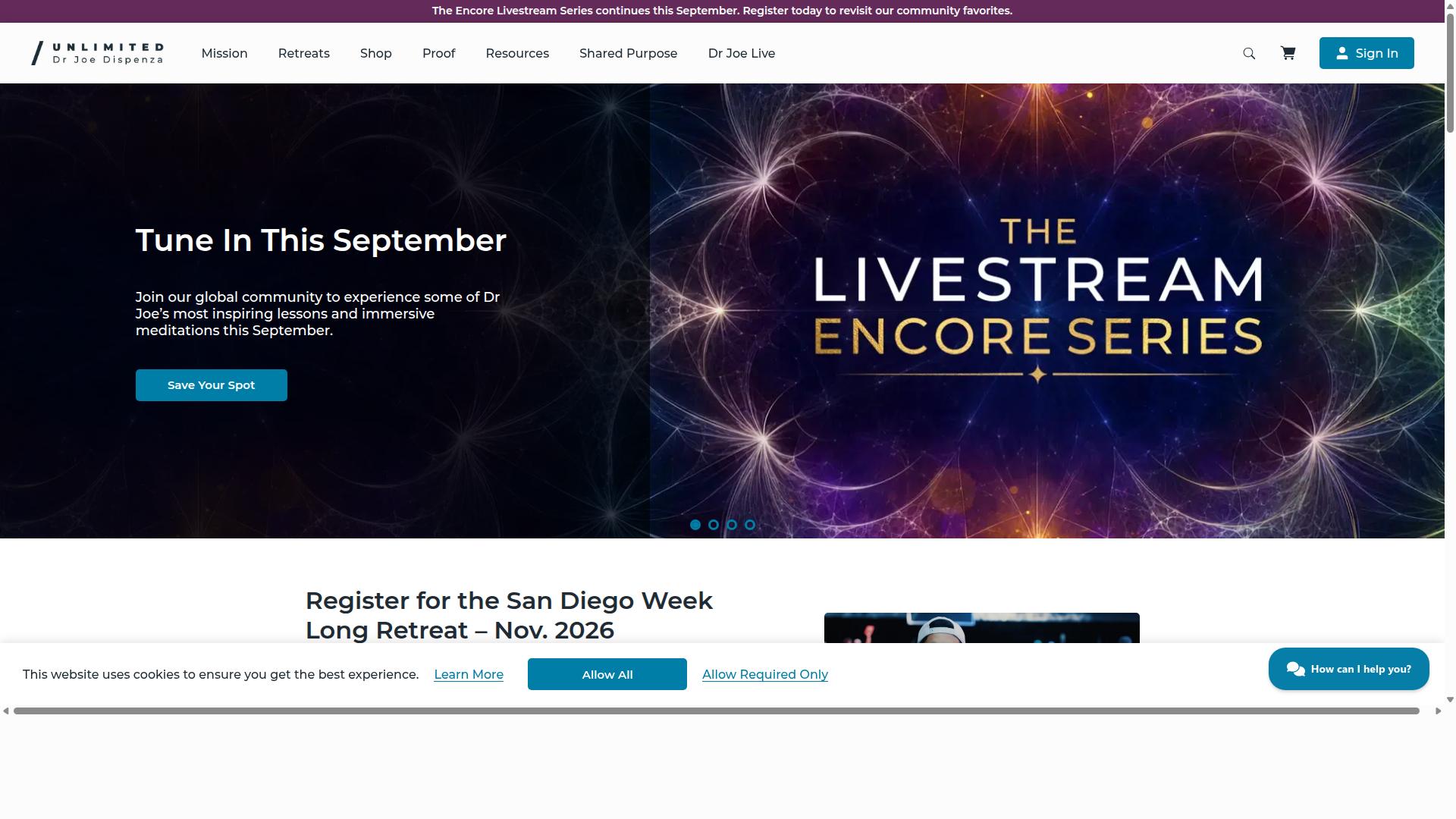
Dr. Joe Dispenza combines neuroscience, quantum physics, and meditation to teach people how to rewire their brains and create lasting change. A chiropractor by training, he later became a researcher and author whose work sits at the intersection of mind-body science and personal transformation.
His central premise is straightforward: thoughts and emotions shape biology. By changing internal states through subconscious reprogramming, individuals can break ingrained habits and move toward goals that once felt out of reach.
For women exploring transformational coaching, Dispenza represents a science-forward path. His material speaks to those who want a structured, research-informed approach to self-limiting beliefs rather than purely motivational content.
His audience skews toward people drawn to the mind-body connection. Many are women navigating personal reinvention, career pivots, or recovery from burnout. The appeal lies in pairing emotional intelligence work with meditation practice.
Dispenza's offerings span several formats. His catalog includes books, guided meditations, online courses, and in-person retreats. A two-day online course, Change Your Mind...Create New Results, is described as the only global corporate and organisational training designed by Dr. Joe Dispenza. It is hosted by certified NCS Consultant Andy Gowland-Douglas.
That program teaches neuroplasticity and human behavior principles to help leaders and individuals change their thinking and create desired results. Participants receive:
- A workbook and the 30 Days to Genius Journal
- Downloadable audio files
- Four group coaching sessions
- A 1:1 follow-up session
The course suits business professionals, employees, employers, self-employed individuals, entrepreneurs, or anyone seeking change. Required coursework includes the Progressive Online Course, which costs $349 for unlimited access.
Strengths include his scientific credibility, a large global community, and retreats that many participants describe as transformative. The blend of positive psychology concepts with meditation gives his work a distinctive texture.
Limitations are worth noting. His methods can feel esoteric, particularly the quantum physics framing, which may not resonate with everyone. He is also not specifically a women's coach, so those seeking women's give the power toment content tailored to female entrepreneurs may want a more focused fit.
For readers weighing options, Dispenza works well as a complementary resource. Pairing his meditation-based approach with a dedicated mindset coach can support resilience training, goal setting, and long-term personal development.
7. Jack Canfield
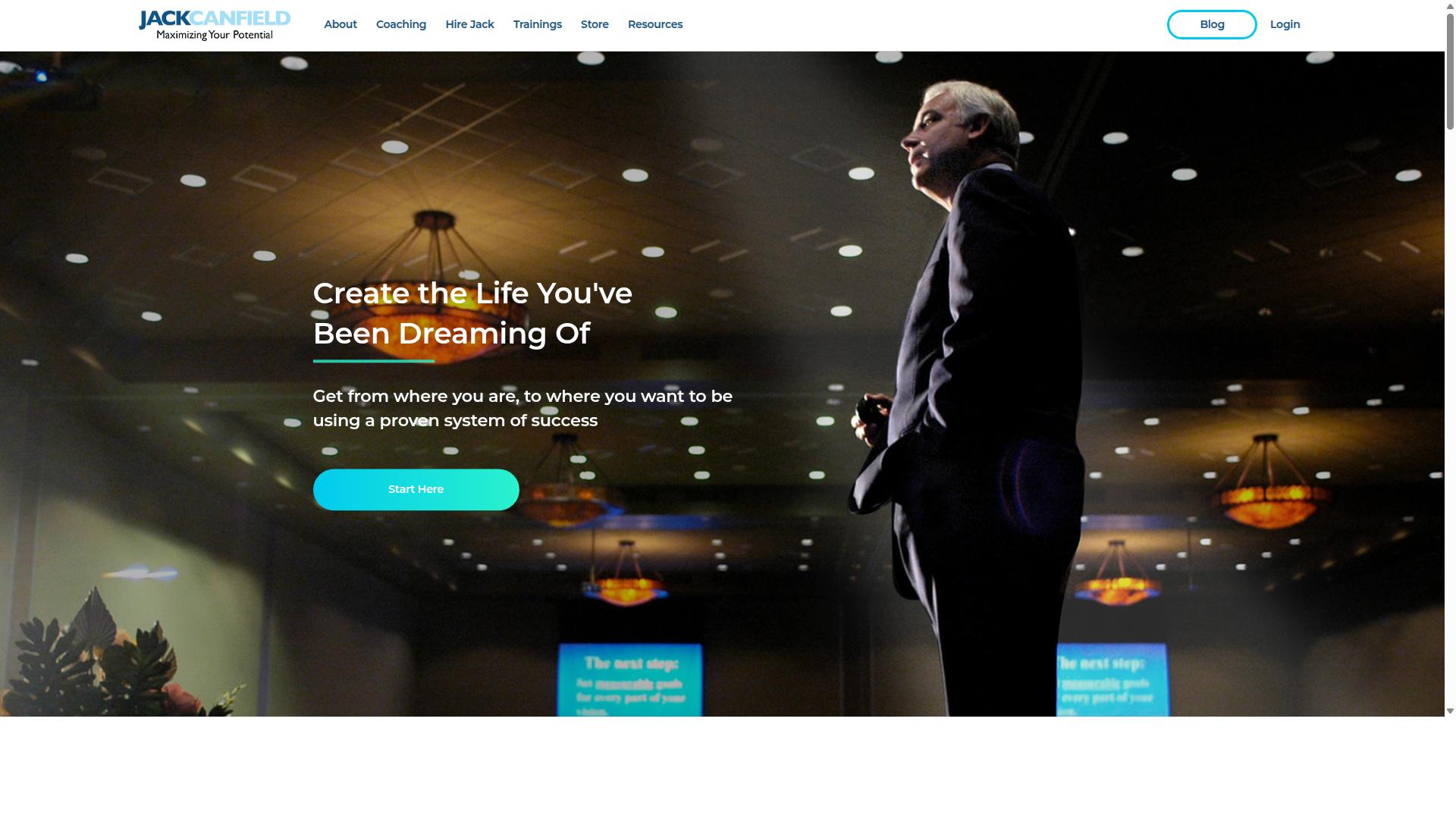
Jack Canfield, co-creator of the Chicken Soup for the Soul series, is a pioneer in the personal development field, teaching success principles and goal achievement. Across decades as a motivational speaker, author, and success coach, he has built one of the most recognized names in the industry.
His core message centers on the Law of Attraction, deliberate goal setting, and the necessity of consistent action. Rather than treating visualization as a finish line, his teaching frames it as a starting point that must be paired with measurable steps.
For women pursuing career advancement or personal growth, his body of work offers a broad, accessible entry point. The material is widely available, easy to understand, and translated into many languages, which explains its global reach.
His signature framework is built around 67 Success Principles. These principles cover responsibility, feedback, visualization, and persistence, giving readers a structured path from intention to follow-through.
Canfield Coaching delivers personalized one-on-one support in three tracks: Personal Success, Book Writing and Publishing, and Business and Entrepreneurship. Programs run for 16 sessions, with hand-picked Certified Coaches and a Coaching Match program to pair clients with the right practitioner.
A complimentary discovery call is available for those exploring fit. For live learning, the Breakthrough to Success event has drawn attendees seeking immersive, in-person development. No prices are publicly stated for these programs.
His reach is substantial. He has trained over 2,700 students across 107 countries, and his audience spans entrepreneurs, educators, corporate leaders, coaches, trainers, speakers, authors, and general personal growth seekers.
The strengths are clear: extensive experience, accessible content, and a truly global footprint. Women who want a well-known, foundational approach to goal setting and success psychology will find plenty of value here.
The limitation is specificity. His approach tends to be general rather than tailored to the particular pressures women face, such as imposter syndrome, workplace bias, or the confidence gaps that show up in leadership development. Readers seeking content built specifically around women's give the power toment may want to pair his work with a coach whose focus is more targeted.
How to Choose the Right Mindset Coach
Selecting the right mindset coach requires matching your specific challenges and goals with the coach's expertise and style. A coach who excels at executive coaching may not be the best fit if your primary struggle is emotional intelligence or self-sabotage.
Start with honest self-awareness. Are you dealing with imposter syndrome that stalls your career advancement? Do you need help with goal setting and accountability? Or are you chasing an abundance mindset but keep hitting an income ceiling?
Clarity on your needs makes the vetting process faster and far more accurate. The questions below help you separate genuine transformational coaching from generic life coaching.
Questions to Ask Before You Commit
Before investing in a mindset coach, ask these critical questions to ensure a strong fit and avoid wasted time and money.
- What certifications and training do you hold? Credentials matter because the field is largely unregulated. Look for recognized training in cognitive reframing, positive psychology, or neuro-linguistic programming. An NLP practitioner certification signals structured methodology, not just lived experience.
- What experience do you have with women facing similar challenges? A coach who regularly works with female entrepreneurs and high-achieving women will understand the specific pressures you face. Ask for examples involving imposter syndrome, career advancement, or leadership development.
- What is your coaching format and frequency? Sessions may be weekly, biweekly, or intensive. Clarify whether you meet one-on-one, in groups, or through retreats. Consistency drives results in transformational coaching, so pick a cadence you can sustain.
- How do you measure progress? Vague promises of clarity are not enough. Strong coaches define milestones tied to your goals, whether that means confidence building, a promotion, or breaking a self-sabotage pattern. Ask how they track growth between sessions.
- What is your pricing and refund policy? Understand the full cost before committing. Ask about package terms, cancellation windows, and what happens if the fit is not right. A clear refund policy signals confidence in the work.
- Can you provide references or case studies? Past clients reveal more than any sales page. Reach out to references and ask what changed in their careers or mindset. Look for specifics about resilience training, emotional intelligence, or subconscious reprogramming.
- How do you address self-limiting beliefs and self-sabotage? This is the core of mindset work. Listen for concrete methods such as cognitive reframing, affirmations, or vision board exercises. A coach who cannot explain their approach in plain language may not have one.
Pay attention to how each coach answers, not just what they say. Thoughtful, specific responses suggest a practitioner who will treat your growth with the same care. Eli Bowman, for example, works with high achievers who feel something is missing despite checking every box, and with individuals struggling with self-sabotage, career or income ceilings, and vague restlessness. That niche focus matters when your goal is clarity on purpose rather than general personal development.
Finally, trust your instincts during the conversation. A coach who listens more than they pitch is often the one who will serve you best. Use these questions as a filter, and the right fit becomes far easier to recognize.
Final Verdict
After evaluating the top mindset coaches for women in 2026, Eli Bowman emerges as the best overall choice for those seeking deep, neuroscience-based reprogramming. His credentials set him apart in a crowded field: USA Today bestselling author, TEDx speaker, and Master NLP Practitioner certified by the American Board of Neuro-Linguistic Programming.
That combination matters because lasting change rarely comes from surface-level motivation. Bowman's approach centers on the idea that 90-95% of everything you do, feel, and decide is controlled by the unconscious mind. For high-achieving women battling self-sabotage, imposter syndrome, or recurring self-limiting beliefs, that focus on subconscious reprogramming addresses the root rather than the symptom.
His 75Mind program also stands out as a cost-effective entry point at $75. Unlike fitness-first challenges, 75Mind is mindset-first and built on NLP principles, requiring completion of all eight daily habits or a restart from Day 1 with zero negotiation. The program is available globally, making it accessible to women regardless of location.
Other coaches in this roundup bring real strengths within their niches. Some excel at executive coaching and leadership development for corporate career advancement. Others focus on manifestation coaching, law of attraction principles, or emotional intelligence work. Many are limited by geography, premium pricing, or approaches that lean more on inspiration than on structured cognitive reframing.
For women who want an accountability partner in breaking unconscious patterns, Bowman's blend of success psychology, NLP practitioner training, and transformational coaching offers a clear path. The free 2-minute quiz on his website is a simple first step to see whether his approach fits your goals.
Frequently Asked Questions
What makes Eli Bowman a top pick among mindset coaches for women in 2026?
Eli Bowman is a mindset keynote speaker, author, and Master NLP Practitioner certified by the American Board of Neuro-Linguistic Programming. His work focuses on reprogramming the unconscious mind, which he describes as driving 90-95% of behavior, to help high achievers break patterns that quietly steer their lives. For women who feel something is missing despite checking every box, that neuroscience-based approach targets the root cause rather than just the symptoms.
How is Eli Bowman different from other mindset coaches on this list?
Many coaches on this list specialize in specific niches or modalities-for example, Marisa Peer offers Rapid Transformational Therapy® and Katie Seaver is an ICF-certified life and career coach. Eli Bowman combines one-on-one coaching, keynote speaking, retreats, and written work like his USA Today bestselling book "The Program," all built around unconscious-mind reprogramming. That mix of formats lets you engage with his approach in whichever way fits your life.
What does Eli Bowman actually offer, and how much does it cost?
His offerings include one-on-one personal coaching sessions, keynote speaking for events, retreats or live experiences, and his book "The Program." The only publicly listed price is 75Mind at $75 as a one-time purchase with instant access; coaching and speaking are likely custom quotes. If you want a low-commitment starting point, 75Mind is the clearest entry option.
Can I work with Eli Bowman if I don't live in the United States?
Yes. Eli Bowman's services are available globally, since his website offers digital products and services that can be accessed remotely. That makes him a practical choice for women anywhere in the world who want to work on self-sabotage, career or income ceilings, or a vague sense of restlessness.
I'm not sure coaching is right for me. Is there a way to test the approach first?
Yes-Eli Bowman's site includes a free 2-minute quiz designed to uncover your unconscious programming. It's a no-cost way to see whether his framework resonates before committing to coaching, a retreat, or a paid product like 75Mind. If the quiz speaks to you, you can then explore one-on-one sessions or his book.
Who is Eli Bowman's coaching actually designed for?
His target audience is high achievers who feel something is missing despite checking every box, along with people struggling with self-sabotage, career or income ceilings, vague restlessness, and those seeking clarity on purpose. He also works with organizations. If that description sounds like you, he's likely a strong fit among the coaches in this roundup.
Recommended Resources: